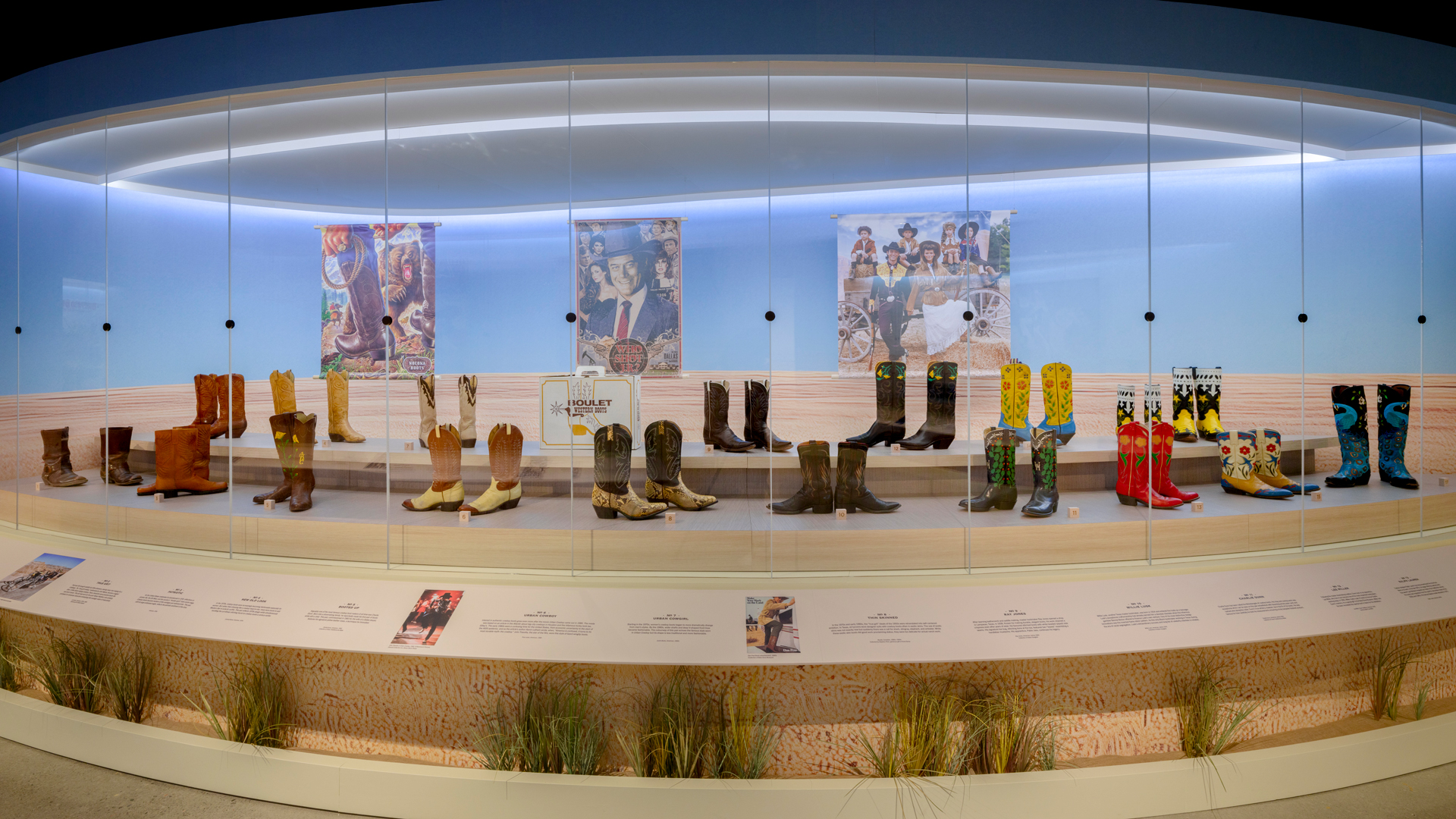
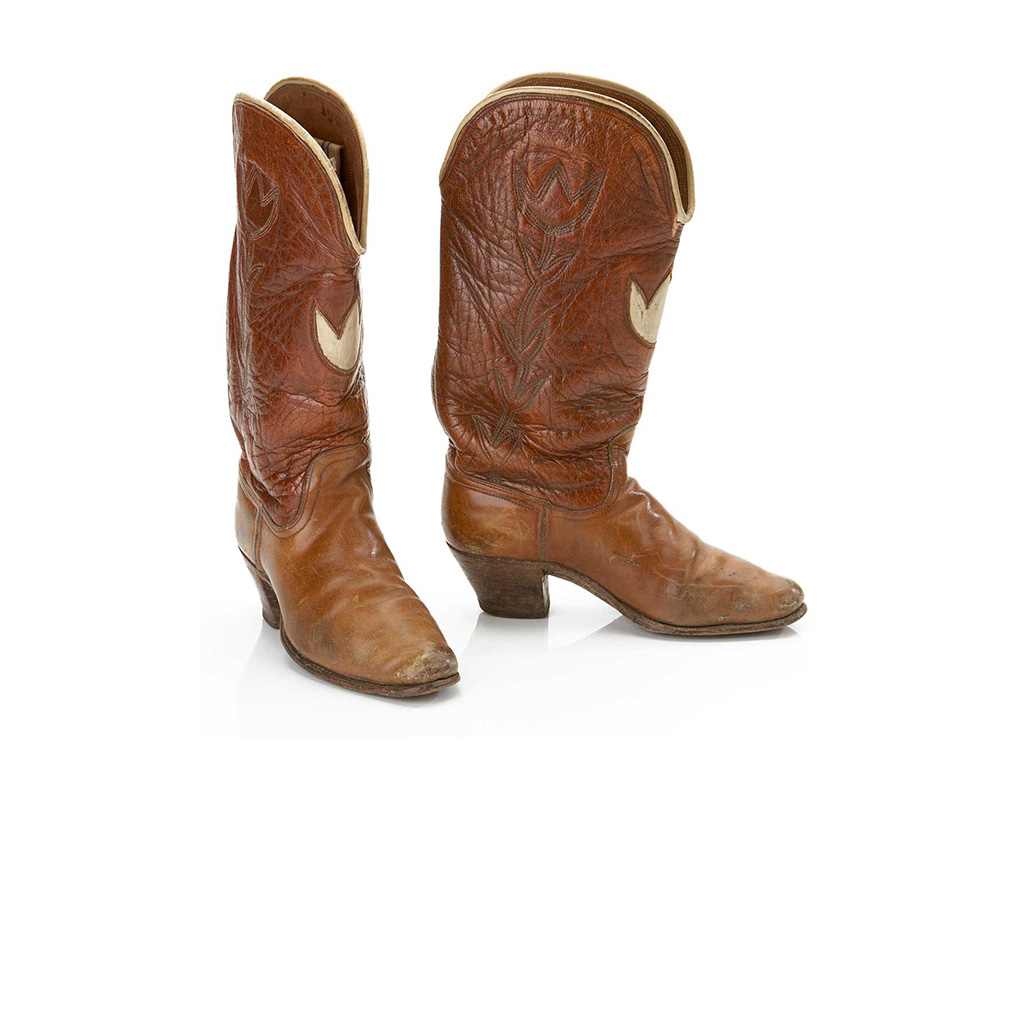
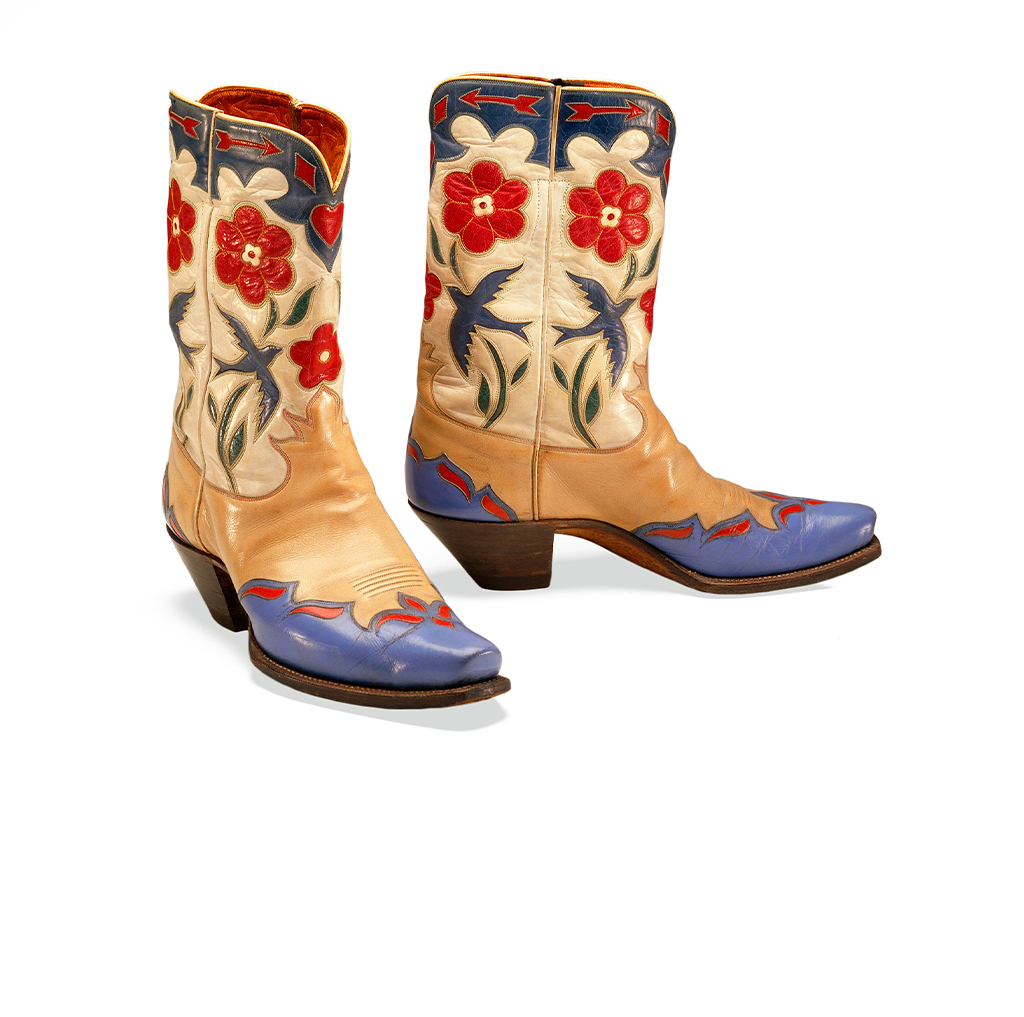
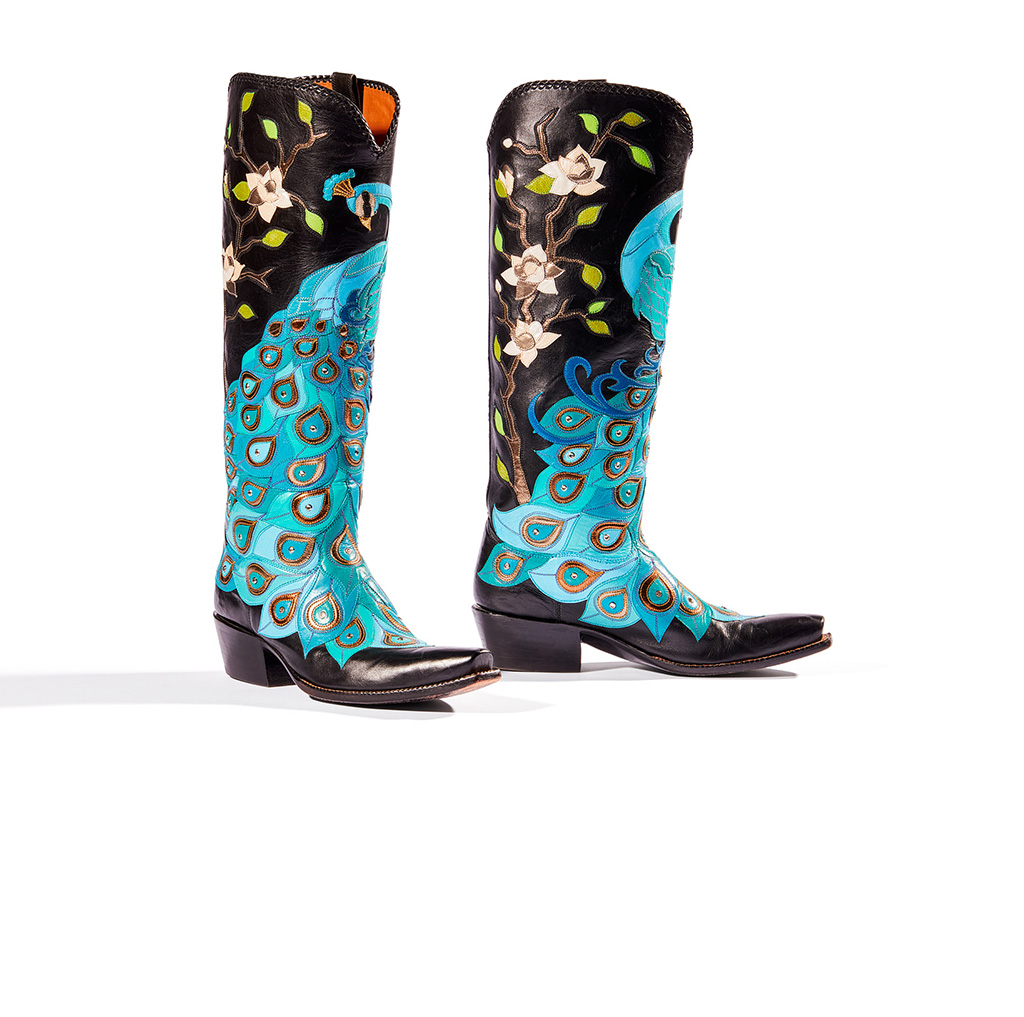
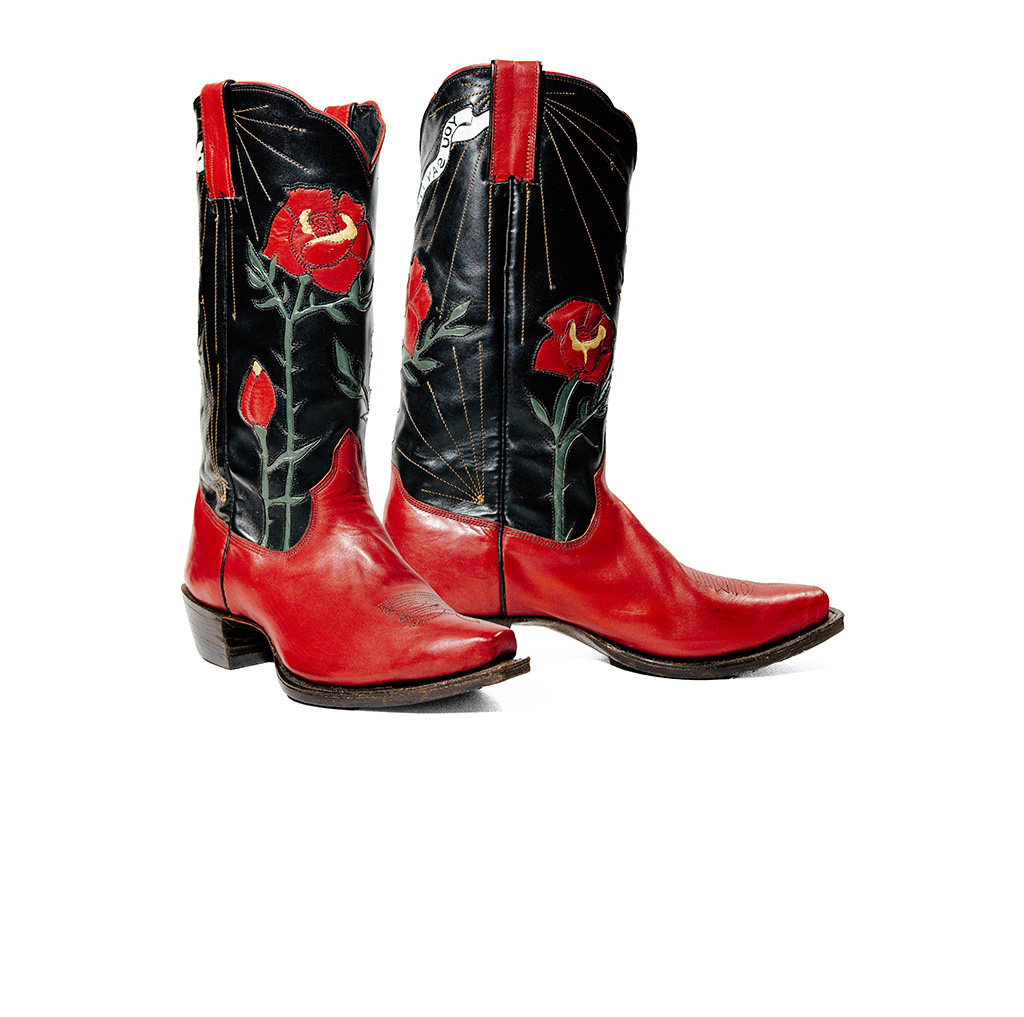
The story of the cowboy boot is steeped in history and legend and is neither simple nor straightforward. Since their invention in the late nineteenth century, cowboy boots have embodied contradiction. They have symbolized labor and leisure, freedom and domination, tradition and reinvention. Cowboy boots were born out of industrialization yet refined through expert craftsmanship, they have been used to both celebrate individualism and forge cultural cohesion. They were central to the closing of the West, yet endure as emblems of freedom and wide-open spaces. Over time, cowboy boots have signaled power and privilege as well as resistance and reclamation. Whether worn in the saddle, on screen, or in the streets, cowboy boots remain a cultural touchstone, embodying both tradition and transformation in a constantly changing world.
Rough & Ready is curated by Elizabeth Semmelhack, including objects and artworks from the BSM collection and 13 lenders. Lenders include: Adam Goeglein, Autry Museum of the American West, Barry Ace, Erik Semmelhack, Flora Knight, The Glenbow-Alberta Institute, Jamie Cuevas Nudie, Lee Miller, Lisa Sorrell, Lucchese Bootmaker, Orville Peck, Sarah Madeleine T. Guerin, and Tony Benattar.
EXHIBITION HIGHLIGHTS Peter Max x Randy Shoes sneakers, c. 1969–1971In the late 60s / early 70s, artist Peter Max was arguably the most influential artist in the Western world. His psychedelic artwork was uplifting, counterculture in feel, and yet extremely marketable. By 1969, he had over 50 commercial licensing agreements. This pair of high tops features Max’s style, including his signature smiling mouth. Peter Max x Randy Shoes sneakers, c. 1969–1971In the late 60s / early 70s, artist Peter Max was arguably the most influential artist in the Western world. His psychedelic artwork was uplifting, counterculture in feel, and yet extremely marketable. By 1969, he had over 50 commercial licensing agreements. This pair of high tops features Max’s style, including his signature smiling mouth. Peter Max x Randy Shoes sneakers, c. 1969–1971In the late 60s / early 70s, artist Peter Max was arguably the most influential artist in the Western world. His psychedelic artwork was uplifting, counterculture in feel, and yet extremely marketable. By 1969, he had over 50 commercial licensing agreements. This pair of high tops features Max’s style, including his signature smiling mouth. Peter Max x Randy Shoes sneakers, c. 1969–1971In the late 60s / early 70s, artist Peter Max was arguably the most influential artist in the Western world. His psychedelic artwork was uplifting, counterculture in feel, and yet extremely marketable. By 1969, he had over 50 commercial licensing agreements. This pair of high tops features Max’s style, including his signature smiling mouth. Peter Max x Randy Shoes sneakers, c. 1969–1971In the late 60s / early 70s, artist Peter Max was arguably the most influential artist in the Western world. His psychedelic artwork was uplifting, counterculture in feel, and yet extremely marketable. By 1969, he had over 50 commercial licensing agreements. This pair of high tops features Max’s style, including his signature smiling mouth. Purchase tickets through ShowPassBUY NOWMedia PartnersBSM programming events have been financially assisted by the Ontario Cultural Attractions Fund, a program of the Government of Ontario through the Ministry of Tourism, Culture and Sport.
The Bata Shoe Museum is located at 327 Bloor Street West, at the southwest corner of Bloor Street West and St. George.
By Transit
From the St. George subway station (on both the Bloor-Danforth and the Yonge-University lines), exit onto St. George Street. Turn left (walk south) for about 30 seconds and you’ll be at the northeast corner of Bloor Street West and St. George Street. From there, cross the road twice to reach the southwest corner of the intersection, and you’re at the Museum!
By Car
From Highway 401
Take the Avenue Road exit and go south to Bloor Street. Turn right onto Bloor Street and continue west to St. George Street. OR take the Bathurst Street exit and go south to Bloor Street. Turn left onto Bloor Street and continue east to St. George Street.
From the Queen Elizabeth Way (QEW)
Get onto the Gardiner Expressway and exit at Spadina Avenue. Proceed north on Spadina to Bloor Street. Then turn right onto Bloor Street and go east on Bloor to St. George Street.
Parking
Street parking and paid parking lots within walking distance of the Museum may be available. Possibilities include:
The Toronto Parking Authority’s Carpark 58, the Bloor-Bedford Garage: 9 Bedford Road, north of Bloor Street West and two blocks east of the Museum.
The Toronto Parking Authority’s Carpark 205: 465 Huron Street, north of Bloor Street West and one block west of the Museum
Search the Site
Info Modal Title
Info Modal Date
Modal event text.
Counting down to the opening of our newest exhibition, The Great Divide: Footwear in the Age of Enlightenment. Do you have your tickets yet?