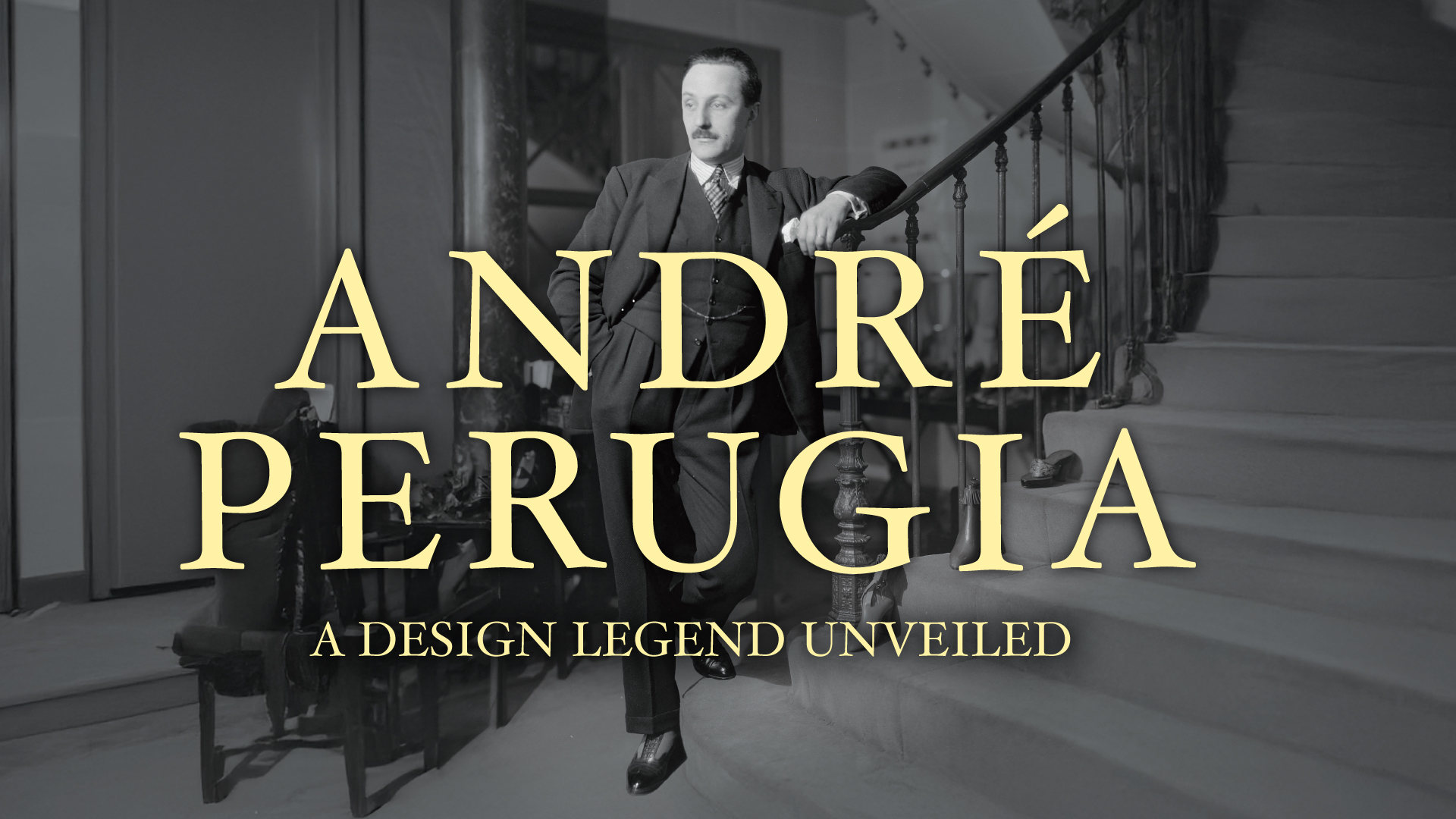
André Perugia: A Design Legend Unveiled
Until April 4, 2027
Now on view – 22 new artifacts!
The Bata Shoe Museum explores the work of one of the most significant and under-researched footwear designers of the 20th century, André Perugia. A pioneering Italian-French shoe designer, André Perugia (1893-1977) is known for his architecturally innovative and technically masterful footwear designs. From his first boutique in Nice in the early 1920s, he revolutionized luxury footwear, creating shoes for fashion houses like Dior and Schiaparelli, as well as for celebrity clients including Josephine Baker, Mistinguette, and Princess Lillian of Belgium. His work is preserved in major museum collections worldwide.
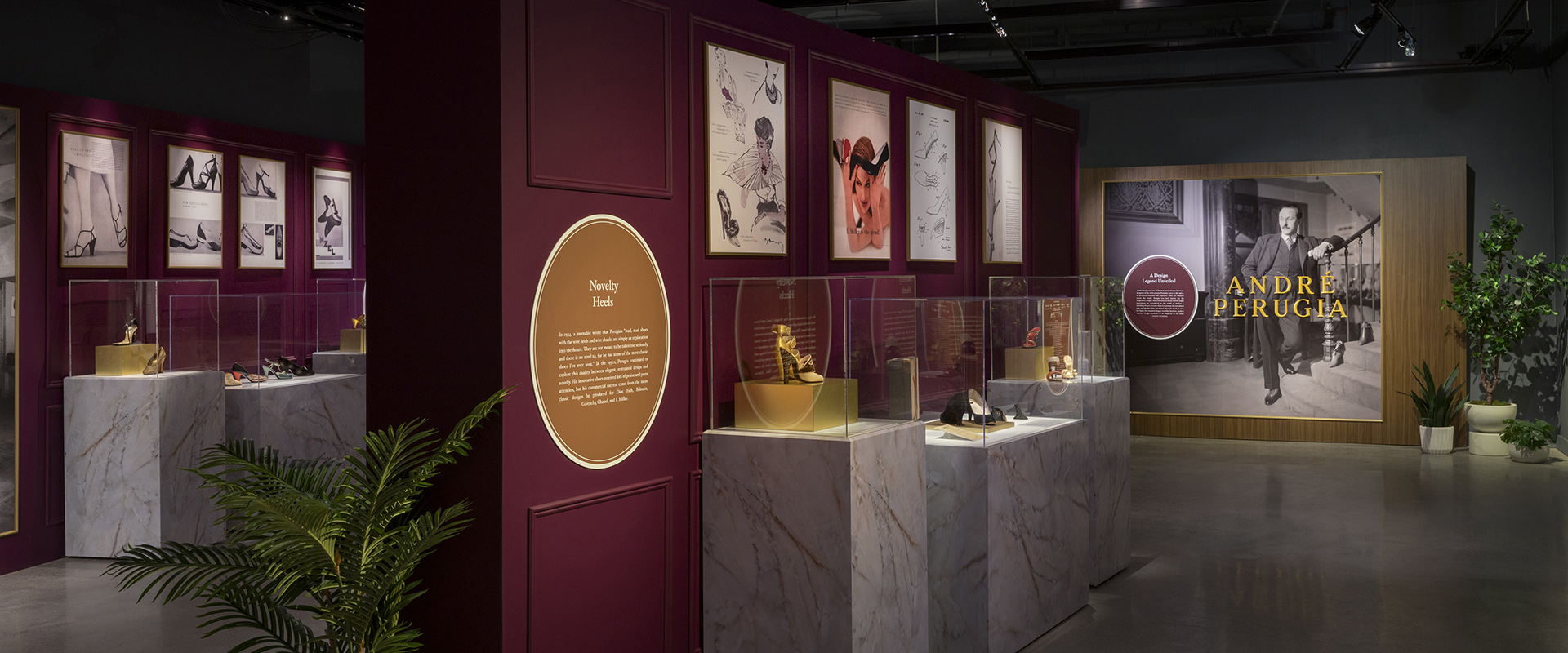
Throughout the run of the exhibit, over 95 examples of the designer’s work dating from the 1920s through the 1960s, will be featured; shoes from contemporary designers inspired by his vision will also be on display. This exhibition will highlight the historical importance of Perugia’s work, contextualizing it within the larger framework of fashion across the decades. It will explore some of his most important innovations, including Perugia’s contribution to the development of the articulated sole and the stiletto heel.
André Perugia is curated by Nishi Bassi and includes objects from the BSM collection, and generous loans from Musée de la chaussure Romans-sur-Isère and Fondation Azzedine Alaia. The exhibition also features donations from Maison Schiaparelli and Manolo Blahnik.
NEW ROTATION HIGHLIGHTS
Rhinestone Shoe
In the early 1920s, André Perugia did something that no shoemaker had done before; he designed women’s evening shoes with uppers made entirely of glittering rhinestones. Newspapers and fashion magazines showered him with praise for this achievement, with one journalist writing, “Perugia has achieved the height of fantastic good taste” with these shoes. This brilliant, jewel-like design is is representative of how Perugia approached design throughout his career: with inventiveness and luxury in mind.
Collection of Fondation Azzedine Alaïa
Schiaparelli Sandal
Platform soles came into mainstream fashion
in the late 1930s, and Perugia produced multiple versions for Elsa Schiaparelli. This sandal features a tall platform sole that combines silver and gold leather to create a daring, high-contrast design. Perugia once remarked that his work
with Schiaparelli “inspired some of his
most successful ideas.”
Collection of Musée de la Chaussure
Articulated Sole
One of Perugia’s major innovations was the articulated sole: a shoe with a sole made with multiple pieces of wood attached to a flexible innersole, and held together by metal hinges, allowing for freedom of movement. Perugia first experimented with this style in the 1920s, and patented it in 1940. Perugia released numerous variations of this incredible design - for daywear, eveningwear, and the beach. This example from the 1920s was made for eveningwear and features a sole covered with hammered metal.
Collection of Musée de la Chaussure
White Strappy Sandal
In the 1930s, Perugia began experimenting with elasticated materials, including the newly invented Lastex, to create shoes that had stretchable uppers. He used this new technology to create a number of tight-fitting, multi-strap sandals for Elsa Schiaparelli, to much success. This white sandal dates to the late 1930s or early 1940s.
Collection of Musée de la Chaussure
Sparkly Sandal
The footwear that Perugia designed for eveningwear in the 1920s was extremely glamorous and ornate. This shoe features a luxurious black silk upper and a rhinestone-covered heel. It also features dozens of shiny rhinestones at the instep. These light-catching details would have added considerable sparkle while the wearer walked and danced.
Collection of Musée de la Chaussure
Turned-out Vamp
One of Perugia’s signature design motifs
was an inside-out vamp. This shoe from
1928 features little triangular pieces folded
over the vamp, which adds dimensionality
and interest. He repeated the inside-out
detail on a number of models in the 1920s,
which were described by Vogue
as “exceedingly chic.”
Collection of Musée de la Chaussure
Black Sandal
This black sandal from 1959 features a very
tall heel, as well as multiple straps and cut-outs
near the toe. A sandal this revealing would have
caused a scandal in the first half of the 20th
century, but by the 1950s, social codes had
changed and more nudity of the female foot
was acceptable. Perugia helped to push the
boundaries of acceptability with his daring
and provocative designs.
Collection of Musée de la Chaussure
Heel-less Shoe
At first glance, the striking blue-grey sandal looks like it has an invisible heel. In fact, the instep strap wraps around the sole to create a heel, just under the middle part of the shoe. This minimalist shoe caused a sensation when first released in the early 1950s and was celebrated as highly futuristic
Collection of Musée de la Chaussure


 EXHIBITION HIGHLIGHTS
Rhinestone Shoe
In the early 1920s, André Perugia did something
that no shoemaker had done before; he designed
women’s evening shoes with uppers made entirely
of glittering rhinestones. Newspapers and fashion
magazines showered him with praise for this
achievement, with one journalist writing, “Perugia
has achieved the height of fantastic good taste” with
these shoes. This brilliant, jewel-like pair, which likely
dates from the mid to late 1920s, is representative of
how Perugia approached design throughout his career:
with inventiveness and luxury in mind.
EXHIBITION HIGHLIGHTS
Rhinestone Shoe
In the early 1920s, André Perugia did something
that no shoemaker had done before; he designed
women’s evening shoes with uppers made entirely
of glittering rhinestones. Newspapers and fashion
magazines showered him with praise for this
achievement, with one journalist writing, “Perugia
has achieved the height of fantastic good taste” with
these shoes. This brilliant, jewel-like pair, which likely
dates from the mid to late 1920s, is representative of
how Perugia approached design throughout his career:
with inventiveness and luxury in mind.
Collection of Musée de la Chaussure
Mask Shoe
Perugia’s ‘mask’ shoe is one of his most recognizable,
and often copied, designs. He first released this model
in 1923, and then returned to this design multiple
times throughout his career. Inspired by Venetian
masks, this mule is representative of the novelty
and playfulness that Perugia would increasingly
engage with as his career progressed. This example
is made of bronzed lizard skin and features gilded heels.
Collection of Musée de la Chaussure
Embroidered Gold
This pair of shoes features vivid turquoise and red embroidery. Against the shiny gold leather of the upper, the shoes are reminiscent of ancient Egyptian material culture, which inspired many designers during the 1920s. What makes this pair of sandals particularly unique is the thin turquoise bands at the base of both heels; this was a special feature of many of Perugia’s designs from this decade. It was often Perugia’s special attention to detail that set his work apart from that of his contemporaries.
Collection of Bata Shoe Museum
Red Mule
In the 1950s, Perugia designed footwear that had the visible outline or impression of the wearer’s toes. There are examples of historic French and Dutch clogs which feature carved feet in them, but Perugia was the first luxury footwear designer to make trompe l’oeil toes fashionable. This motif is one of Perugia’s most imitated, and may have inspired footwear by Vivienne Westwood, Jeffrey Campbell, and Schiaparelli in recent years.
Collection of Musée de la Chaussure
Blade Heel
In 1951, Perugia revolutionized footwear design by
creating sandals with steel shanks, and thin steel heels,
which Harper’s Bazaar described as looking “like diamond needles.” They were unlike any other shoe produced in
the 1950s and were celebrated by Vogue as “the most spectacular shoe idea.” The technology and innovation used to create the “the blade heel” set the stage for the development of the stiletto later in the decade.
Collection of Musée de la Chaussure
Gold Boot
Throughout his career, Perugia produced footwear for notable fashion houses including Dior, Givenchy, and Paquin. Arguably, his most creative partnership was with surrealist fashion designer Elsa Schiaparelli. Through his work with Schiaparelli, Perugia played with form and height, creating glamorous wedges, platform heels, wrap around sandals, and ankle boots. This shiny gold boot from the late 1930s is both modern and historical. The button closures reference 19th century women’s footwear, and the scalloped topline adds a more contemporary art deco twist. Perugia once remarked that his work with Schiaparelli “inspired some of his most successful ideas.”
Collection of Musée de la Chaussure


 Purchase tickets through ShowPass
BUY NOW
Purchase tickets through ShowPass
BUY NOW
 Media Partners


 BSM programming events have been financially assisted by the Ontario Cultural Attractions Fund, a program of the Government of Ontario through the Ministry of Tourism, Culture and Sport.