Brilliant: The Art of Beaded Footwear Around the World
On view October 22, 2026, until April 2028
Beads are a popular form of ornamentation found on footwear around the world. Spanning 400 years of history, this exhibition brings together more than 85 meticulously crafted objects to illuminate both the delicate nature of beadwork and the exceptional effort, care, and skill it demands. Across diverse traditions, beads have been used in both decorative and symbolic ways, expressing status, identity, and spirituality. Brilliant traces the global history of beadwork through exceptional examples of beaded footwear from Africa, Europe, South Asia, Turtle Island (North America), and Western Asia.
Curated by Elizabeth Semmelhack, Director and Senior Curator, Bata Shoe Museum; Nishi Bassi, Curator and Manager of Exhibitions, Bata Shoe Museum; and Justine Woods, Assistant Professor, Parsons School of Design, The New School.
Exhibition Highlights
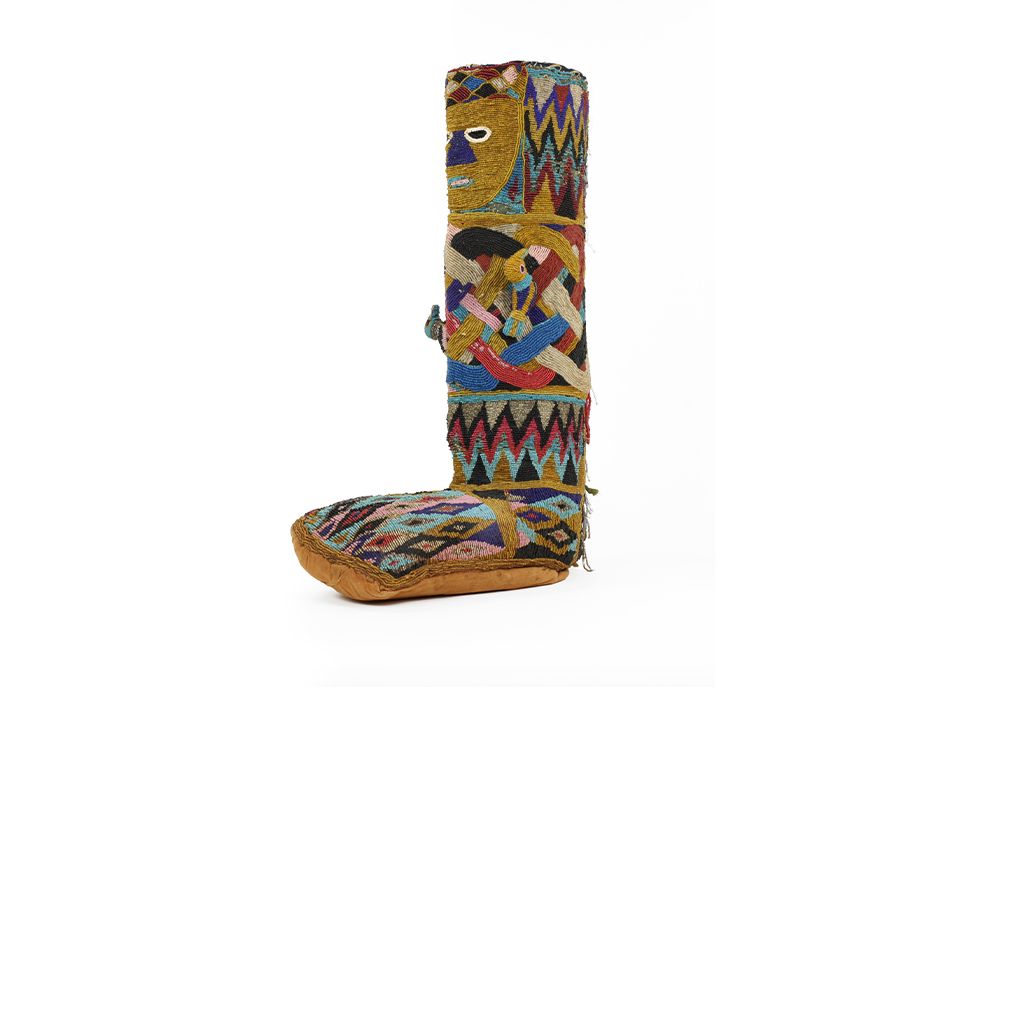
Yoruba, 1900 – 1920Elaborately beaded footwear is traditionally part of the symbolically complex royal regalia, which proclaims the status of the Oba or leader of Yoruba peoples. Symbols include beaded faces which honour Odùduwà , the ancestral Oba of the Yoruba, interlace patterns of beadwork that symbolize the interconnectedness of the divine with the living and birds which signify female power.
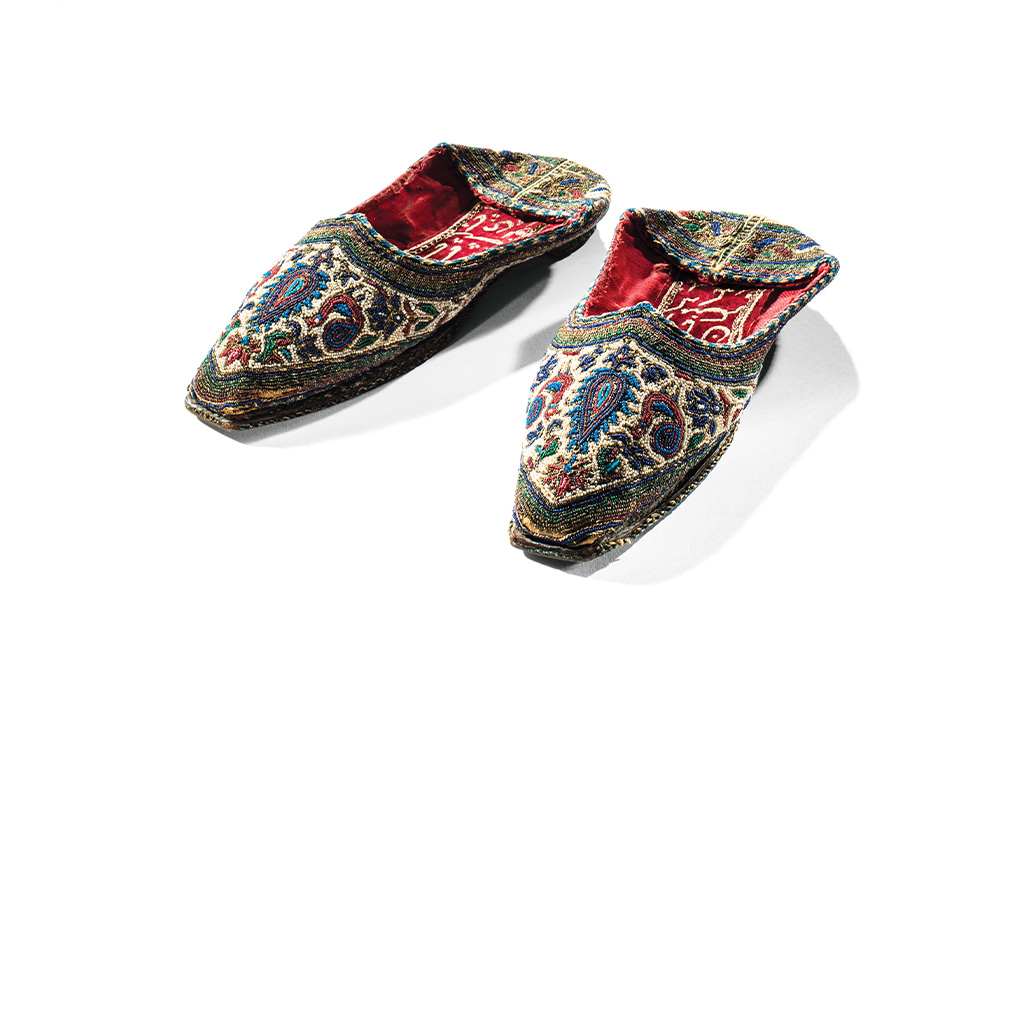
Collection of the Bata Shoe Museum Persian, mid-19th centuryThis pair of Persian shoes is decorated with tiny glass beads and small pearls and features a cypress tree on each vamp. The shoes were likely made for a woman in the Persian court for the Qajar monarchy in the 19th century. The words of poetry on the insoles read, “Your grace puts even the brightest face of the sun to shame. Let anyone who denies prove otherwise. Praise the dust under your feet.”
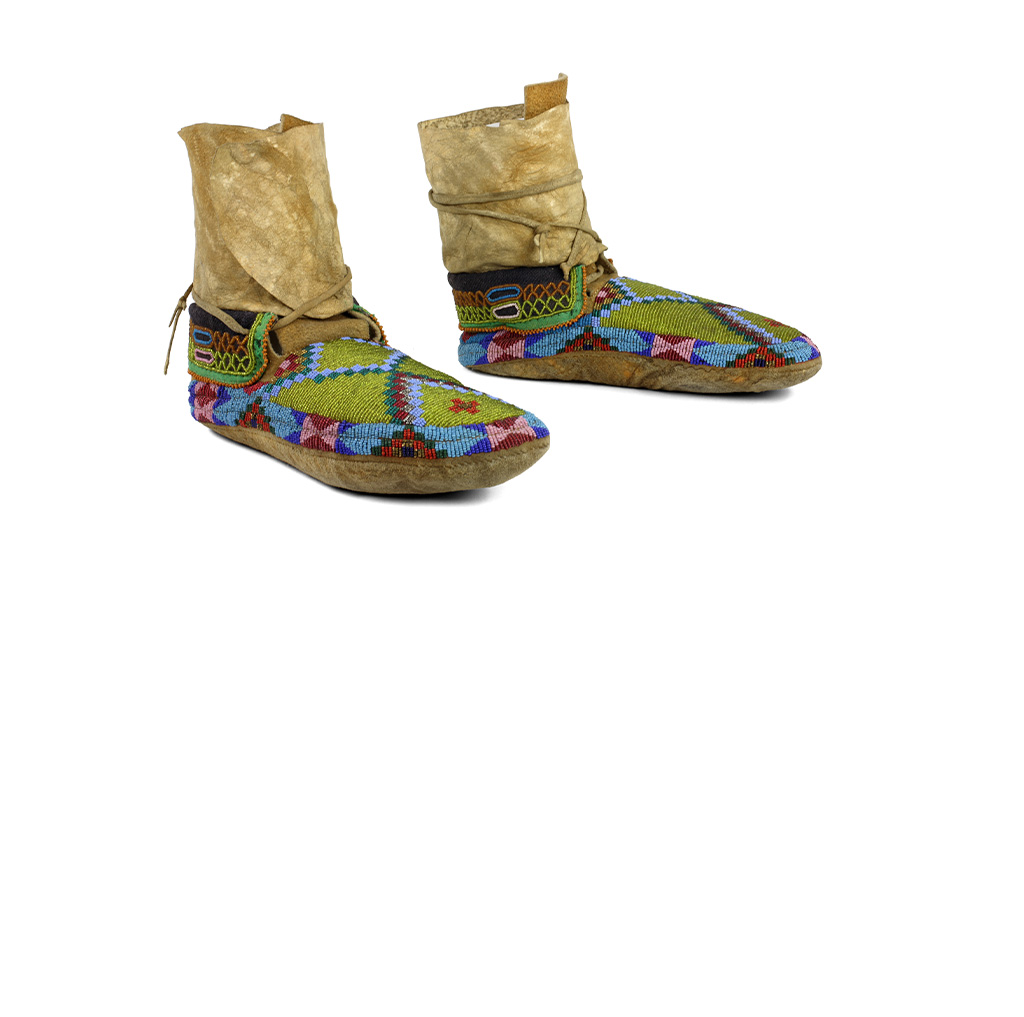
Collection of the Bata Shoe MuseumNêhiyawak ancestor artist, c. 1875One of the oldest examples of Indigenous iconography is the "otter tracks" line motif. Translated across embroidery, ribbon work, and beadwork techniques, the design mimics the physical imprints otters leave behind while travelling through the snow. Here, the beaded “otter tracks” can be around each cuff.
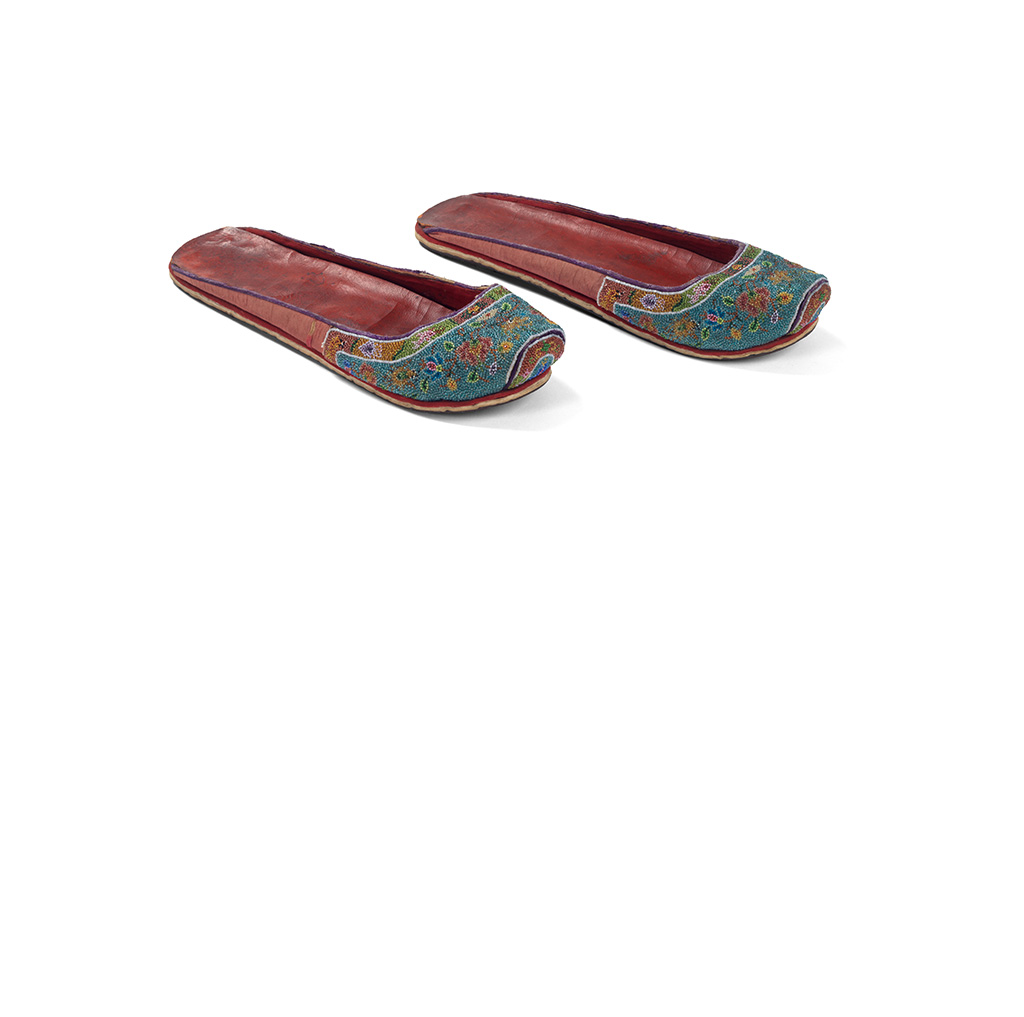
Cared for by Bata Shoe MuseumPeranakan, probably 1920sBeautifully embellished mules are a longstanding part of Southeast Asian Peranakan wedding attire. Brides were responsible for beading their bridal shoes as a demonstration of their taste and skill. This pair features a variety of lush flowers done in delicate beadwork.
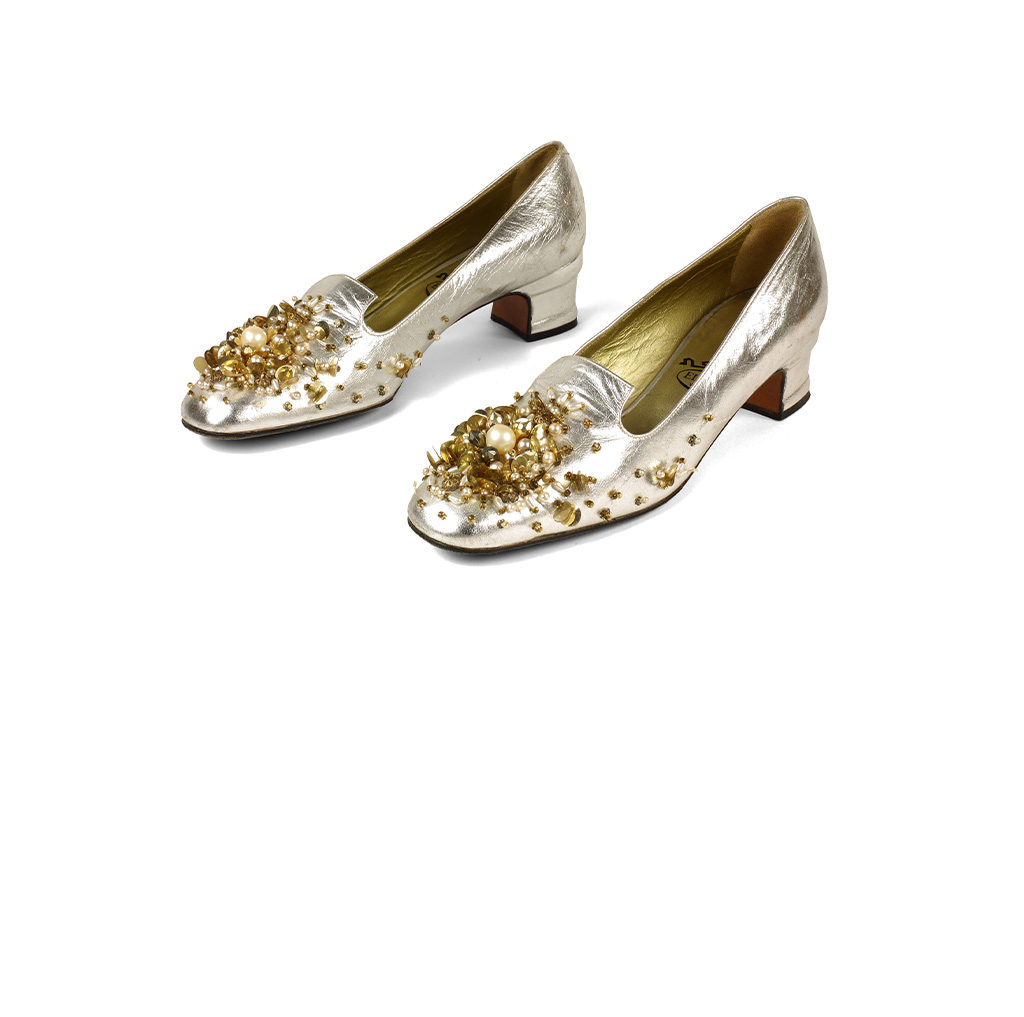
Collection of the Bata Shoe MuseumItalian, 1966-1972 Fashion in the 1960s stood in marked contrast to the previous decade, renowned for its elegance and formality. The “Youthquake” ushered in children’s inspired dress including low-heeled shoes embellished with playfully large baubles. The bold embellishment on these silver kid shoes includes oversized plastic beads, synthetic pearls, and oversized sequins.
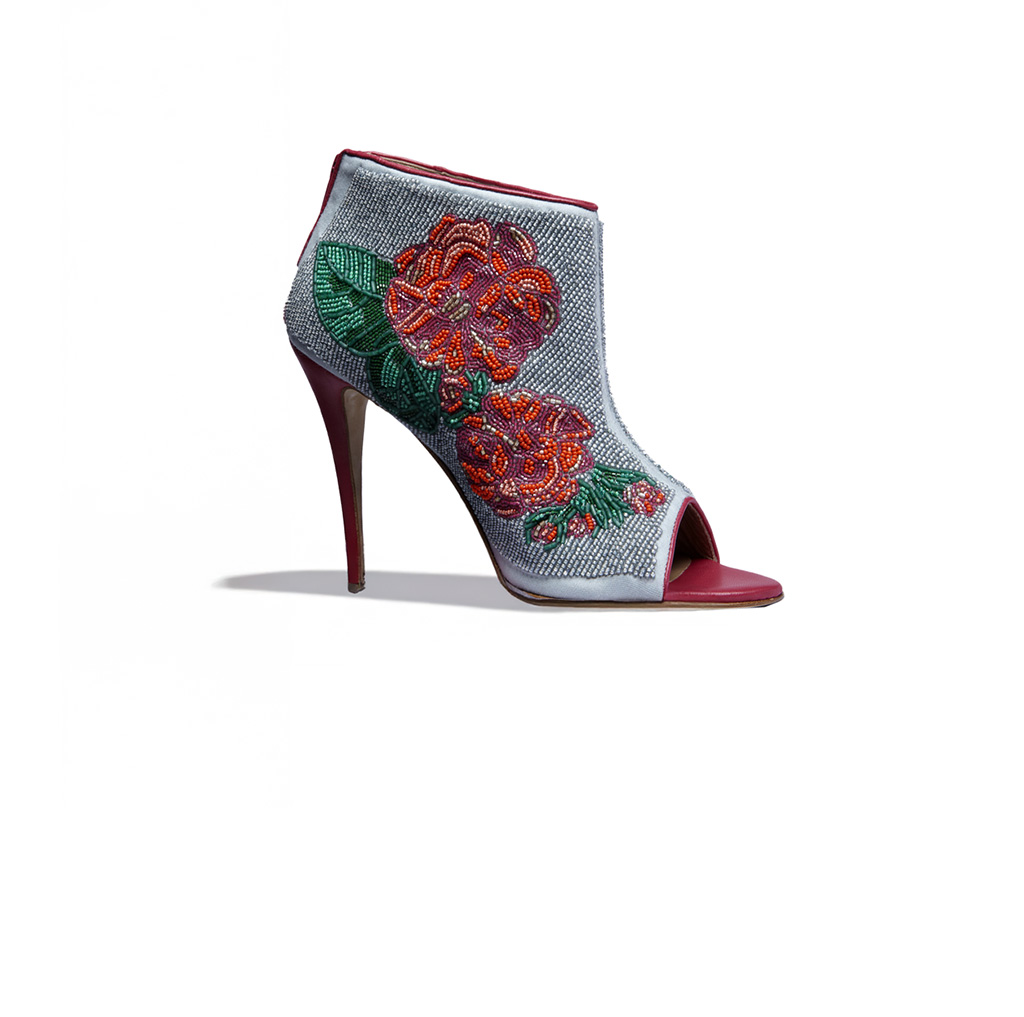
Collection of the Bata Shoe MuseumGhanaian American / Spanish, 2012.In 2012, New York-based Mimi Plange collaborated with Manolo Blahnik for her Spring/Summer collection,
A Flower in a Desert. The beadwork on this shoe reflects Plange’s research into the dress traditions of Herero women in Namibia, whose distinctive gowns evolved from dresses introduced by German missionaries in the late 19th century. The floral motifs and glass-bead traditions of Eastern and Southern Africa are also reflected in their design.
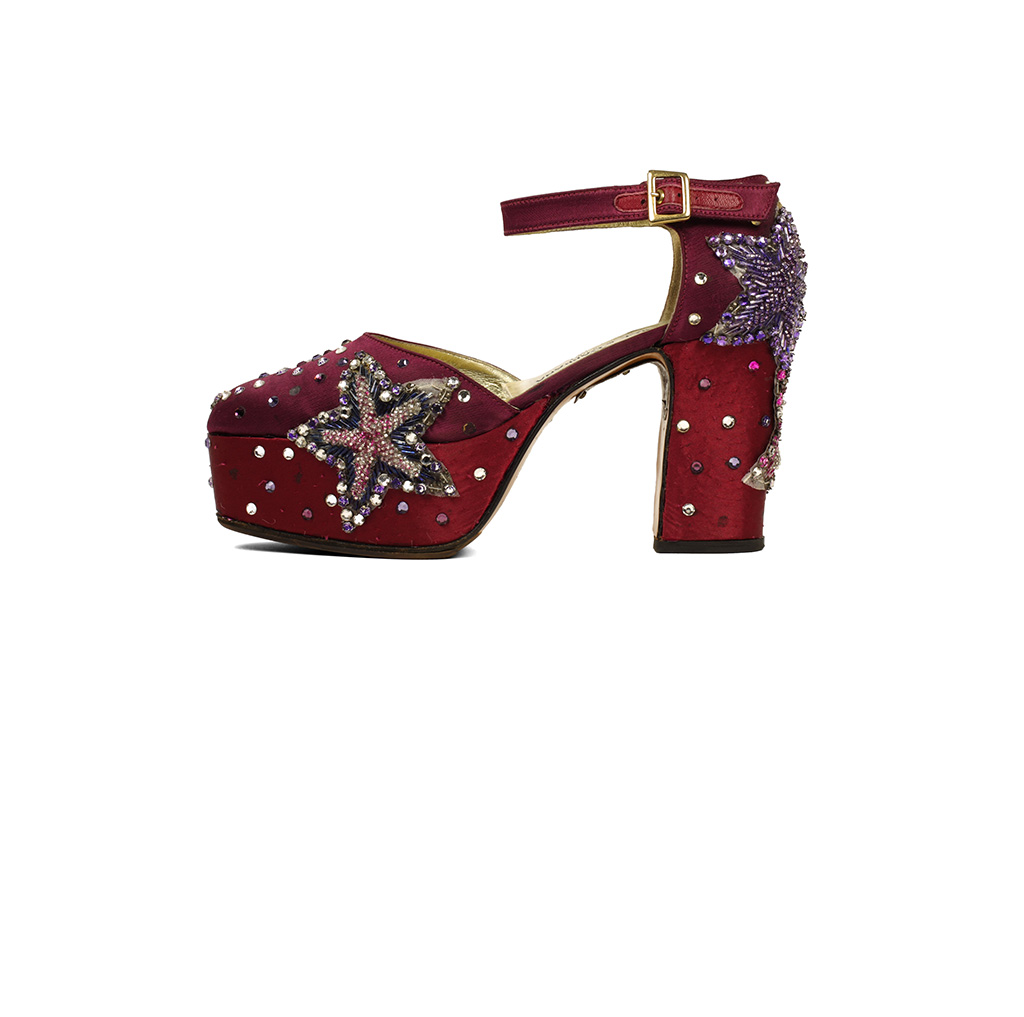
Collection of Mimi Plange Studio, New YorkItalian, 1993. This outrageous and colourful purple platform sandal was made for dancing. Designed by Dolce and Gabbana, they were specially made for pop icon Madonna to wear during her 1993 Girlie Show World Tour. The shoes feature thick steel reinforcements underneath for added stability, and the uppers are covered with decorative sequins and long purple beads in the shape of oversized stars.
Collection of the Bata Shoe Museum.
The Bata Shoe Museum is located at 327 Bloor Street West, at the southwest corner of Bloor Street West and St. George.
By Transit
From the St. George subway station (on both the Bloor-Danforth and the Yonge-University lines), exit onto St. George Street. Turn left (walk south) for about 30 seconds and you’ll be at the northeast corner of Bloor Street West and St. George Street. From there, cross the road twice to reach the southwest corner of the intersection, and you’re at the Museum!
By Car
From Highway 401
Take the Avenue Road exit and go south to Bloor Street. Turn right onto Bloor Street and continue west to St. George Street. OR take the Bathurst Street exit and go south to Bloor Street. Turn left onto Bloor Street and continue east to St. George Street.
From the Queen Elizabeth Way (QEW)
Get onto the Gardiner Expressway and exit at Spadina Avenue. Proceed north on Spadina to Bloor Street. Then turn right onto Bloor Street and go east on Bloor to St. George Street.
Parking
Street parking and paid parking lots within walking distance of the Museum may be available. Possibilities include:
The Toronto Parking Authority’s Carpark 58, the Bloor-Bedford Garage: 9 Bedford Road, north of Bloor Street West and two blocks east of the Museum.
The Toronto Parking Authority’s Carpark 205: 465 Huron Street, north of Bloor Street West and one block west of the Museum
Search the Site
Info Modal Title
Info Modal Date
Modal event text.
Counting down to the opening of our newest exhibition, The Great Divide: Footwear in the Age of Enlightenment. Do you have your tickets yet?